Matsutake gohan (松茸ご飯) or pine mushroom rice is a uniquely fragrant fall delicacy that embodies the essence of Japanese cuisine.
In Japan, the seasons play a central role in determining the flavors
and colors of the food. While greenhouses and modern transportation
networks allow “seasonal” produce to be had all year round, there’s an
irresistible draw to the fleeting seasonality of ingredients. That’s why
there’s still a great emphasis placed on the seasons.
Matsutake mushrooms are the embodiment of this fixation on
seasonality with a primary season lasting just a few short weeks during
fall. They have a bouncy, almost crunchy texture when cooked, and exude a
clean earthy aroma reminiscent of cedar.
Like porcini’s and truffles, Matsutake mushrooms are difficult to
cultivate, which means the ones you buy in the store where most likely
foraged by hand by someone. Combined with their relative rarity and high
demand and you have yourself one pricey fungus. Just one mushroom can
fetch several hundred dollars in Japan and boxes can go for thousands of
dollars.
Luckily for those of us in the North America, they’re pretty abundant
in the Pacific Northwest and because they’re relatively unknown there
isn’t a ton of consumer demand. I’ve seen them at farmers markets and
upscale grocers for as little as $15 per pound, comparable to other
foraged mushrooms.
While we don’t really think of rice as being new or old in the
States, Shinmai (新米), or “new rice” is another hallmark of fall in
Japan. Because fresh rice has a higher water content, it has a better
texture and flavor than rice that’s been sitting on a shelf for a year.
Matsutake gohan (松茸ご飯) or “pine mushroom rice” combines these two
seasonal delicacies into a uniquely fragrant rice dish that exemplifies
the essence of Japanese cuisine. It’s simplicity belies the depth of
complex flavours that come together in this humble bowl of rice, and its
presence on menus heralds the coming of fall.
I like to cook the rice in konbu dashi because it boosts the
level of umami in the dish without getting in the way of the mushrooms.
This allows the Matsutakes to take center stage in this dish showcasing
their unique texture and flavor.
Like a solo performance without a backing track, matsutake rice is
made synergistically better with the addition of some mitsuba and
sudachi zest to help accent the bold flavor of the mushroom. Mitsuba,
which literally means “3 leaves” is an herb that looks a bit like giant
cilantro, but it’s flavor profile is quite different with a fresh woody
flavor that’s somewhere between carrot tops and celery. Sudachi, is a
small green citrus that’s available in fall with a flavor profile that’s
like a cross between green mandarins and grapefruit.
Both can be a little tough to find in the US, but they should be
available in large Japanese grocery stores. If you can’t find them, you
can certainly make matsutake gohan without them and you could try
substituting other green citrus zest for the sudachi.
Matsutake Gohan (Pine Mushroom Rice)Matsutake gohan (松茸ご飯) or pine mushroom rice is a uniquely fragrant fall delicacy that embodies the essence of Japanese cuisine.Marc Matsumoto
Thoroughly
clean the dirt and sand off of the mushrooms using a damp paper towel.
If you find the dirt particularly stubborn, you can use a knife to
scrape away a layer of mushroom. But avoid washing the mushroom as this
will wash away some of the flavor.
Put
the rice in a strainer and wash until the water runs almost clear.
Drain the rice thoroughly and then put it in a heavy bottomed pot (or a
rice cooker pot).
Shred the matsutake by scoring the stem and pulling the mushrooms apart into segments.
If
you are using a rice cooker, add the soy sauce, sake and salt and pour
the konbu dashi in until the water level rises to just under the 2 cup
line.
Add the Matsutake mushrooms and cook according to your rice cooker directions.
If
you are cooking this on the stove, put the rice in a heavy bottomed pot
with a lid and add the konbu dashi, soy sauce, sake and salt.
Let the rice rest for 1 hour. While this isn't necessary it will improve the texture of the rice.
Bring
the rice to a boil over high heat and then cover with a lid and lower
the heat to maintain a gentle simmer. Set the timer for 15 minutes.
Without opening the lid, turn the heat off and let the rice steam for another 10 minutes.
When
the rice is done stir in the mitsuba and sudachi zest and serve hot
sprinkled with a little finishing salt such as fleur de sel.
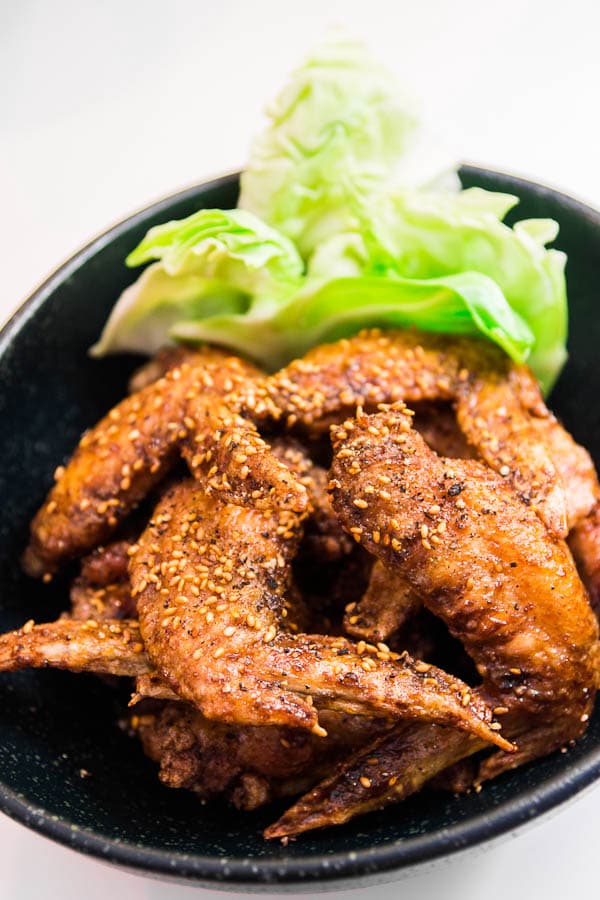
Tebasaki (Japanese Fried Chicken) These Nagoya-style Tebasaki (Japanese chicken wings) are crisp on the outside with a sweet and savory glaze that's that's redolent of garlic with a spicy black-pepper kick. Tebasaki(手羽先) literally translates to “wing tips” and refers to the cut of chicken as well as to a dish popular in izakayas around the city of Nagoya. Unlike the other Japanese fried chicken , Tebasaki is always made with bone-in chicken wings, has little to no breading, and is seasoned after it’s fried. Despite the absence of any significant crust, the wings are fried until the skin is rice cracker crisp before being dunked in a sweet and peppery soy sauce based glaze. Think of it as the Japanese cousin of Buffalo wings, and Korean fried chicken. So how does one go about making chicken so crispy without a batter or breading, and then maintain the crisp crunch after being drenched with a glaze? There are a few tricks to getting these restaurant-good without an indus...


 Thoroughly clean the dirt and sand off of the mushrooms using a damp paper towel. If you find the dirt particularly stubborn, you can use a knife to scrape away a layer of mushroom. But avoid washing the mushroom as this will wash away some of the flavor.
 Put the rice in a strainer and wash until the water runs almost clear. Drain the rice thoroughly and then put it in a heavy bottomed pot (or a rice cooker pot).
 Shred the matsutake by scoring the stem and pulling the mushrooms apart into segments.
 Add the Matsutake mushrooms and cook according to your rice cooker directions.
 When the rice is done stir in the mitsuba and sudachi zest and serve hot sprinkled with a little finishing salt such as fleur de sel.

Comments
Post a Comment